Slope engineering in Basingstoke addresses the assessment, design and stabilisation of natural and man-made inclines that could pose risks to property, infrastructure or public safety. The town's position on the northern edge of the Hampshire Downs means that many developments sit on or near the chalk escarpment and overlying clay-with-flints deposits. These geological conditions create specific slope stability challenges, from shallow translational failures in weathered chalk to deeper rotational slips in overconsolidated clays. A comprehensive slope stability analysis is therefore essential before any construction or remediation work begins, ensuring that ground movements are properly understood and managed.
The local geology plays a decisive role in how slopes behave across the Basingstoke area. The Upper Chalk formation, which underlies much of the district, is a weak porous limestone that can lose significant strength when saturated. Above it, the clay-with-flints is a heterogeneous mixture of stiff clay and angular flint fragments that is prone to seasonal shrink-swell cycles. Where these materials interface, perched water tables can develop, increasing pore water pressures and reducing effective stress along potential failure surfaces. Understanding these hydrogeological interactions is fundamental to any robust slope assessment in the region.
UK practice for slope engineering is governed by Eurocode 7 (BS EN 1997-1 and -2) and its UK National Annex, which set out the requirements for geotechnical design including limit state analysis for slopes. The British Standard BS 8002:2015 provides additional guidance on earth retaining structures, while CIRIA publications such as C580 and C760 offer detailed recommendations for embedded retaining walls and slope stabilisation techniques. For projects in Basingstoke, the local planning authority will typically require a site-specific geotechnical investigation and slope stability report that demonstrates compliance with these standards, particularly where development is proposed within 20 metres of a slope crest or toe.
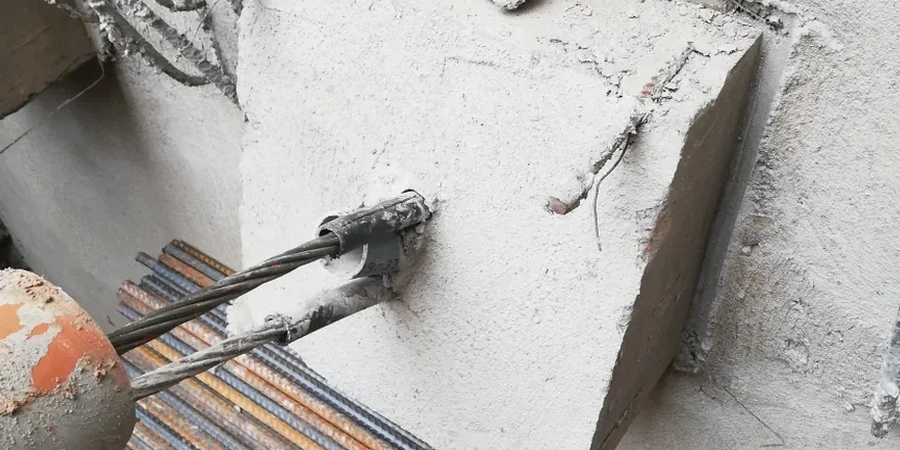
The types of projects requiring slope engineering expertise in Basingstoke are diverse. Residential developments on the fringes of the town, such as those near Lychpit or Old Basing, frequently encounter sloping ground that needs cutting back or retaining. Infrastructure projects, including road widening along the A30 and railway embankment stabilisation for the South Western Main Line, demand rigorous slope assessments. Commercial developments on brownfield sites with historical fill materials also require careful evaluation. For slopes requiring reinforcement, active/passive anchor design provides a reliable solution, using tensioned or untensioned ground anchors to transfer loads into competent strata beyond the failure zone.
Questions and answers
What are the main factors affecting slope stability in the Basingstoke area?
The primary factors include the local geology of Upper Chalk and clay-with-flints, groundwater conditions creating perched water tables, slope geometry and the seasonal weather patterns that influence pore water pressures. Human activities such as excavation at the toe or loading at the crest can also trigger instability by altering the equilibrium of existing slopes.
When is a slope stability analysis required for a development project?
A slope stability analysis is typically required when a development is proposed within 20 metres of a slope crest or toe, where slopes exceed 1:3 gradient, or where there is evidence of historical instability. The local planning authority will request this as part of the geotechnical submission to demonstrate compliance with Eurocode 7 and BS 8002.
How do ground anchors improve slope stability?
Ground anchors improve stability by transferring tensile loads from the unstable near-surface zone into deeper, competent strata. Active anchors are stressed during installation to apply an immediate restraining force, while passive anchors mobilise resistance gradually as the slope deforms. Both types increase the factor of safety against sliding and rotational failure.
What regulations govern slope engineering work in the UK?
Slope engineering in the UK is governed by Eurocode 7 (BS EN 1997-1 and -2) with its UK National Annex, which establishes limit state design principles. Supporting documents include BS 8002:2015 for earth retaining structures and CIRIA guides C580 and C760. The Health and Safety Executive also enforces the Construction (Design and Management) Regulations 2015 for safe execution of works.