Ground investigation forms the essential first step in understanding the physical and mechanical properties of the soil and rock beneath any proposed development site. In Basingstoke, a town experiencing sustained residential and commercial growth, comprehensive site investigation is not merely a regulatory checkbox but a fundamental engineering necessity. This category encompasses a range of intrusive and non-intrusive techniques designed to characterise the ground profile, assess geotechnical parameters, and identify potential hazards such as made ground, variable bedrock, or groundwater issues. Without a robust investigation, projects risk unforeseen ground conditions that can lead to costly delays, structural failure, or long-term maintenance liabilities.
The importance of thorough investigation in Basingstoke is amplified by the town's complex and varied geology. Much of the central and northern areas are underlain by the London Clay Formation, a stiff, overconsolidated clay that is prone to significant seasonal shrinkage and swelling, presenting a well-known challenge for shallow foundations. To the south and east, the landscape transitions onto the chalk of the North Downs, where solution features and variable rockhead depths create a high risk of ground collapse and differential settlement. Superficial deposits, including river terrace gravels along the River Loddon and patches of clay-with-flints capping the chalk, add further layers of complexity that a desktop study alone cannot resolve.
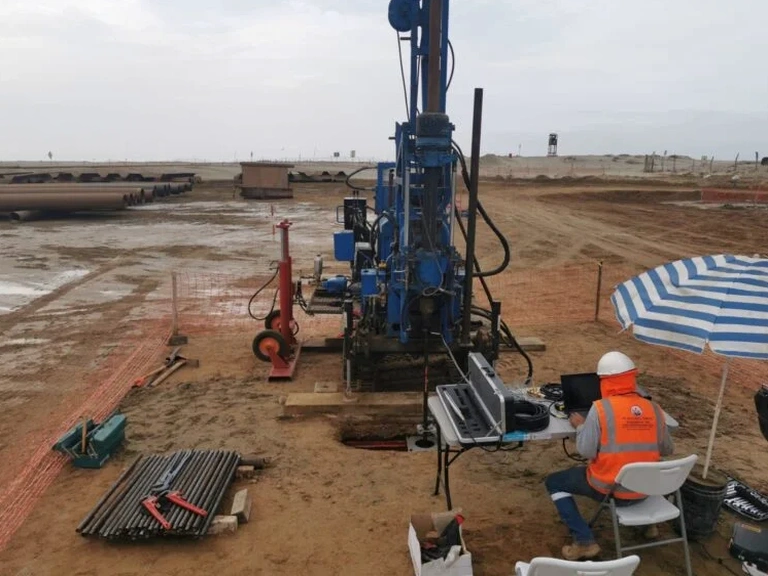
A well-designed investigation programme in the UK must adhere to the stringent framework set out in Eurocode 7 (BS EN 1997), specifically Parts 1 and 2, which govern geotechnical design and ground investigation. The British Standards Institution also provides crucial guidance through BS 5930, the code of practice for ground investigations. This standard dictates the planning, execution, and reporting of investigations, ensuring that data is collected and interpreted to a consistent and reliable quality. Compliance with these standards is invariably a planning condition set by Basingstoke and Deane Borough Council, and is essential for discharging building control requirements and securing structural warranties.
The types of projects in Basingstoke that demand a detailed ground investigation are diverse. Large-scale residential developments on greenfield sites, such as those around the Manydown area, require a full geotechnical and geo-environmental assessment to design safe foundations and remediation strategies. In the town centre, commercial redevelopments and the conversion of historic buildings often necessitate a careful investigation to assess the impact on neighbouring structures and to characterise deeply buried anthropogenic deposits. Infrastructure projects, from road improvements to flood alleviation schemes along the River Loddon, rely on accurate ground models to ensure stability and long-term performance. A key tool for gathering continuous subsurface data in these varied conditions is the Cone Penetration Test, which provides high-resolution profiles of soil behaviour, particularly valuable in the soft alluvial deposits and the variable chalk.
Available services
Questions and answers
What is the difference between a Phase 1 and Phase 2 ground investigation?
A Phase 1 investigation is a non-intrusive desk study and walkover survey that collates historical, geological, and environmental data to create a preliminary risk assessment. A Phase 2 investigation is the subsequent intrusive phase, involving physical sampling and testing through boreholes, trial pits, or in-situ tests like the Cone Penetration Test to verify the ground conditions and assess identified risks quantitatively.
When is a ground investigation required by Basingstoke and Deane Borough Council?
A ground investigation is typically required as a pre-commencement planning condition for almost all major developments and for smaller projects in areas with known geotechnical or contamination risks. The council's local validation checklist mandates that a suitable site investigation report, following BS 5930 and BS 10175, must be submitted to discharge conditions related to land stability, contamination, and foundation design before construction can lawfully begin.
What are the most common geotechnical risks identified by investigations in Basingstoke?
The most frequently identified risks are associated with the shrink-swell potential of the London Clay, which can affect shallow foundations, and the presence of dissolution features and variable rockhead within the chalk bedrock to the south. Other common hazards include compressible alluvial deposits in river valleys, potential historical contamination from former industrial uses, and the unpredictable nature of made ground in the town centre.
How is the scope of a ground investigation determined for a site in Basingstoke?
The scope is designed by a qualified geotechnical engineer based on the initial Phase 1 findings and the proposed development's characteristics. It is tailored to the specific geological setting of the Basingstoke site, targeting the identified hazards. The design specifies the type, depth, and number of exploratory holes, sampling protocols, and in-situ tests, all in accordance with BS 5930, to build a reliable ground model for safe and economical design.